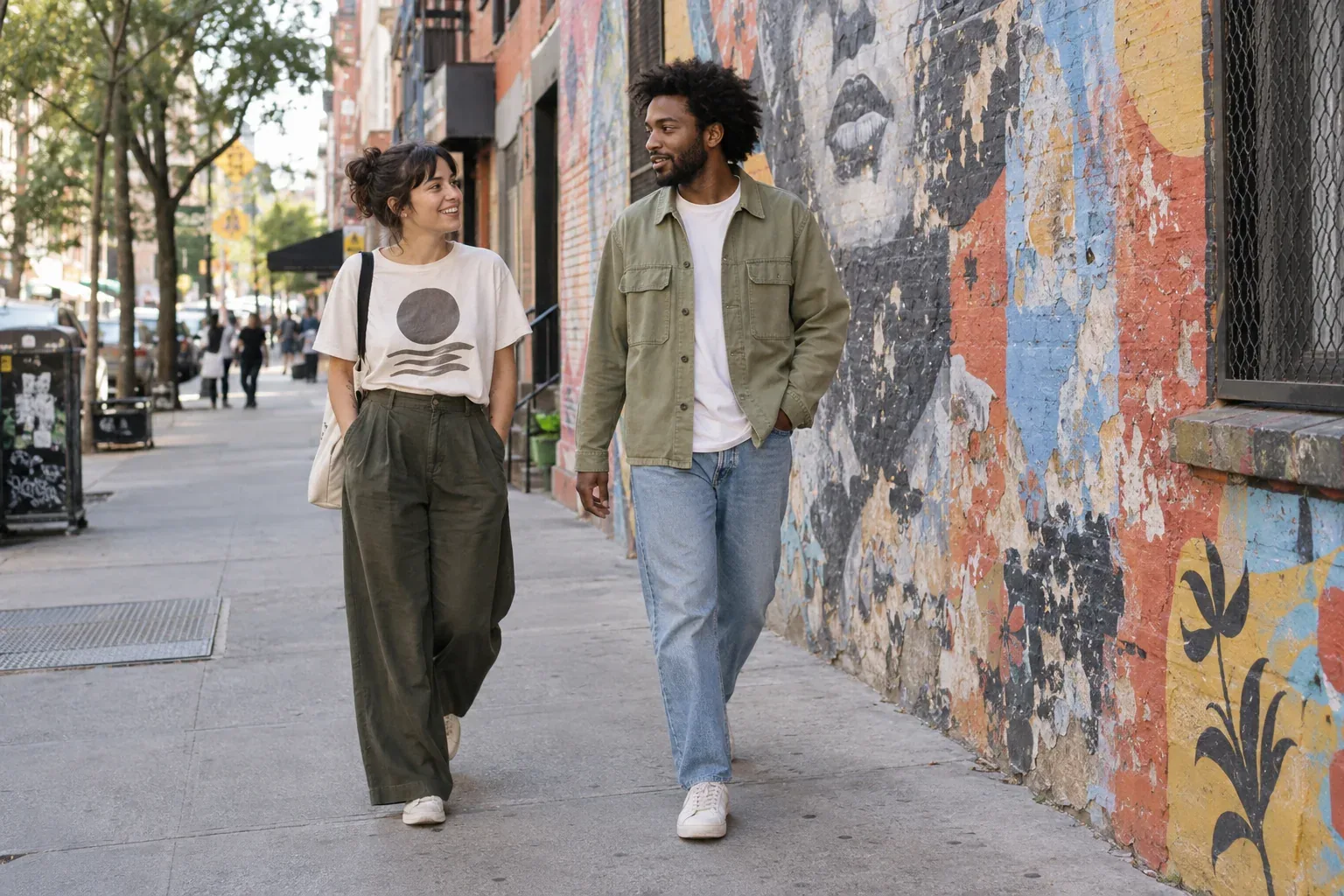
Street fashion is easiest to recognize when it looks like somebody's actual life. A graphic tee worn under a favorite jacket, trousers with room to move, and shoes that have already seen a few miles can say more about a person than an outfit assembled from every new trend at once. The street is where clothing has to work: on a bus, outside a venue, at a skate spot, or on the walk to work. That practical setting is part of its appeal.
There is no single streetwear uniform. Different cities and communities have developed their own ways of dressing, and those influences keep meeting and changing. The Museum at FIT's exhibition on hip-hop style traces how young Black and Brown people used customization, logos, sportswear, and individual expression to shape a visual language that fashion later adopted on a far wider scale. Remembering those origins matters: the culture came from people and places, not a mood board or a price tag.
Start with the clothes you reach for
A useful first step is to look at the pieces you already wear repeatedly. Maybe that is a boxy T-shirt, a worn denim jacket, wide-leg pants, or a cap you take everywhere. Those choices reveal what feels natural to you. Build from them instead of buying an entire look in one afternoon. Personal style grows through use, adjustment, and the occasional mistake; it rarely appears fully formed on a shopping receipt.
Fit changes the character of a look before color or graphics do. A relaxed top can sit comfortably over straighter trousers; a fitted shirt can anchor a loose jacket and wider pants. Try balancing shapes rather than assuming every item needs to be oversized. Check the outfit while walking and sitting, not only while standing in front of a mirror. If a layer rides up, a sleeve catches, or the shoes make a normal day difficult, the styling may need another pass.
Give a graphic room to speak
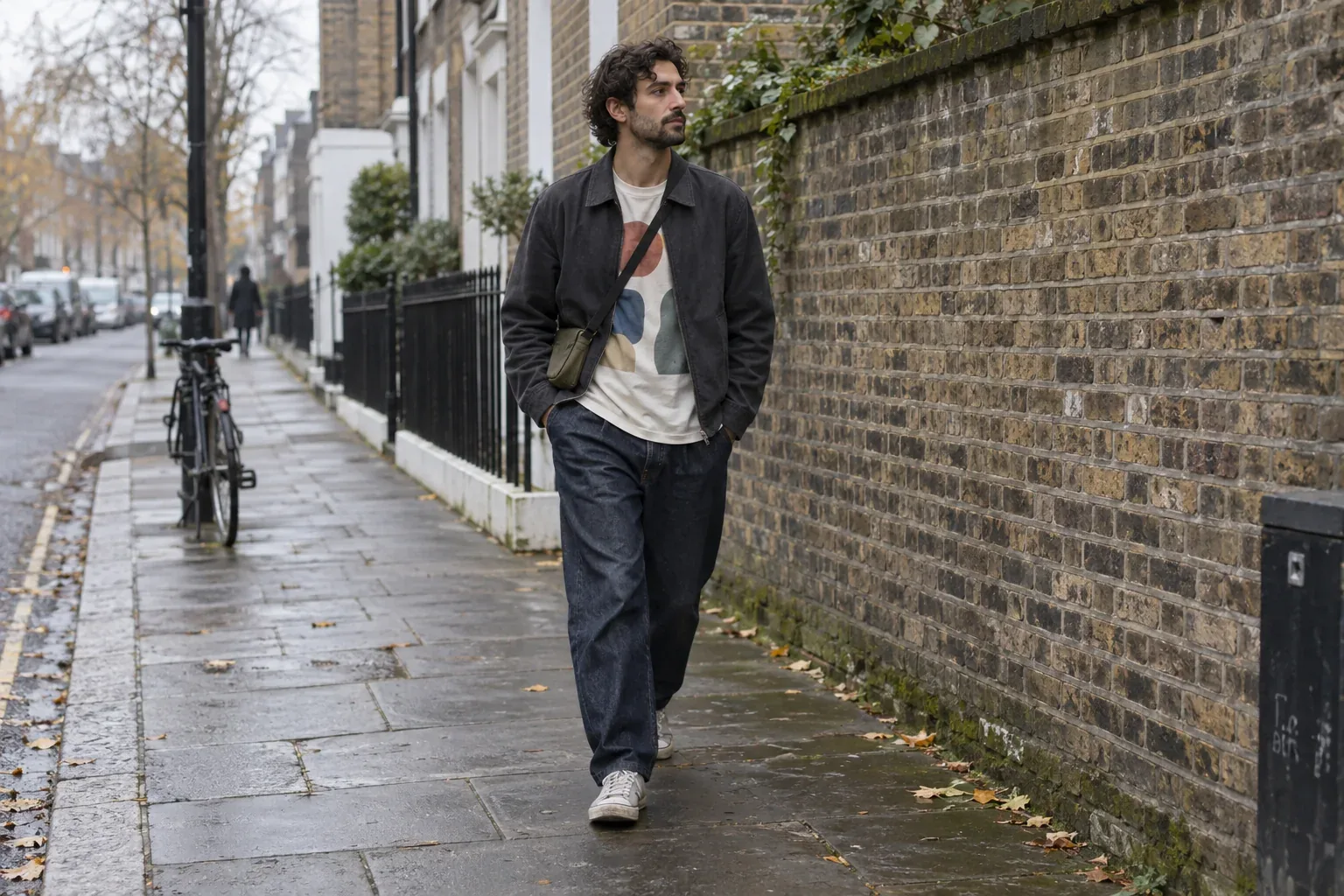
A graphic tee can be the visual center of an outfit without competing with everything around it. Choose an image or print that you actually enjoy looking at. Then let the rest of the clothes support it: plain denim, a solid overshirt, or a jacket that repeats one color from the artwork. When every piece carries a bold print, the eye has nowhere to rest. One strong idea is often enough.
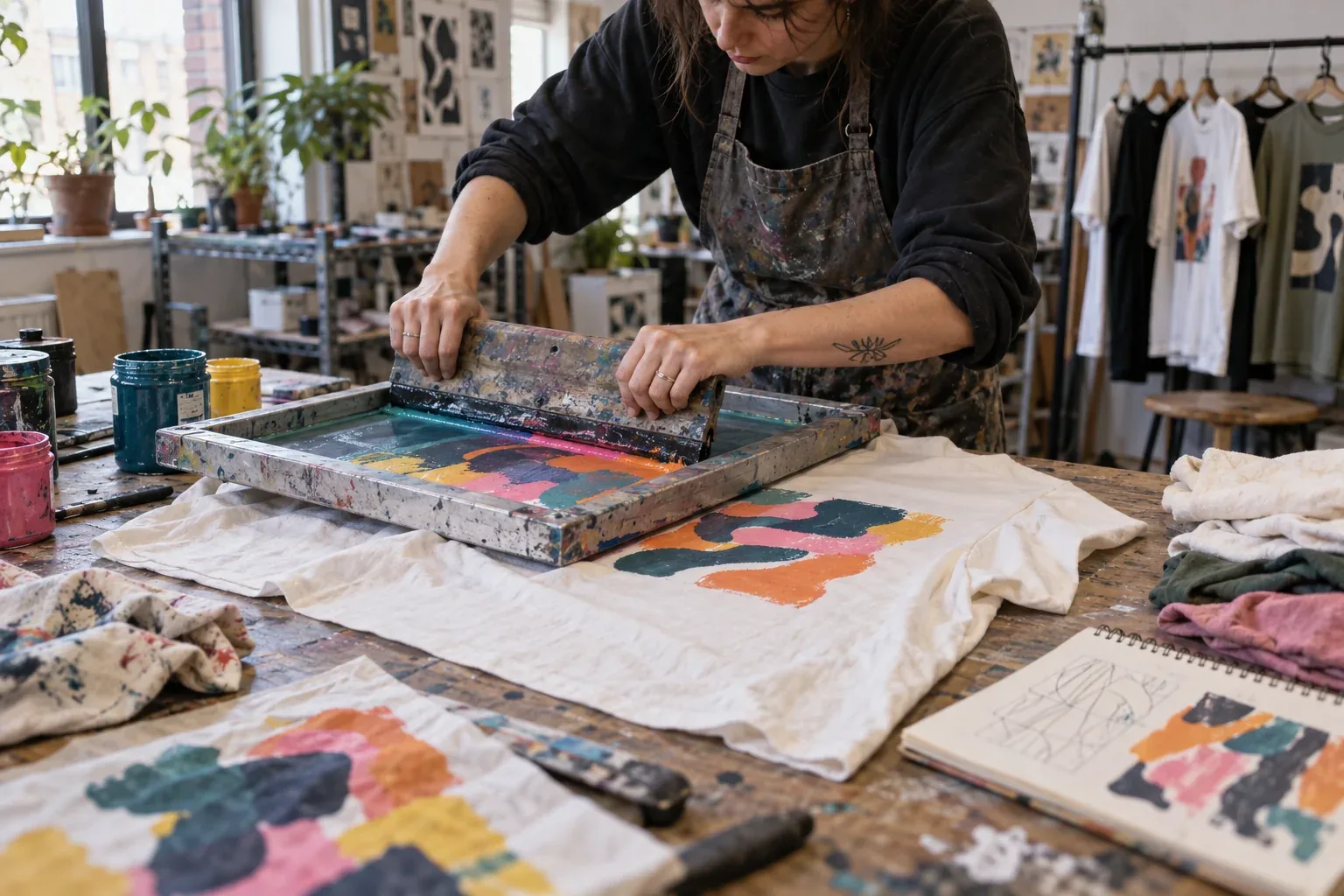
The story behind the design can matter as much as the design itself. A shirt bought directly from a local artist, small print studio, gallery, or independent label may connect you to a scene you care about. Ask who made the work and whether the artist is credited. Street art has often been copied onto products without the creator's permission; buying from the people responsible for a design is a practical way to respect the work you want to wear.
Use layers, color and texture with purpose
Layering makes a small wardrobe more flexible. A tee can work alone in warm weather, under an open work shirt when the temperature drops, or beneath a heavier jacket on a cold commute. Each layer should have a job. If the shirt, jacket, and bag all demand attention, remove one element and see whether the outfit becomes clearer. The aim is not to make clothing look complicated; it is to make it work together.
A limited color palette can hold very different items in the same conversation. Black, cream, denim blue, and one accent color are enough for many combinations. Texture adds depth without adding noise: washed cotton next to crisp canvas, faded denim next to a smooth nylon shell, or a soft knit beside a structured overshirt. Footwear and accessories can be expressive, but they should still fit the way you spend the day.
Current street-style photographs show that people still combine polished and casual pieces in individual ways rather than following a single formula; Vogue's Fall 2026 street-style survey offers examples of that variety. You do not have to copy those looks. Use them as prompts: could a color combination, a scarf, or a different jacket length work with what you already own?
Three easy ways to put a look together
For a casual day, start with a graphic tee you like, straight or relaxed jeans, and clean sneakers. Add a lightweight overshirt if you need another layer. Keep the other colors quiet so the artwork reads clearly. This is a dependable outfit because each piece can also be worn with something else.
For a sharper version, pair a plain tee with wide-leg trousers and a cropped or structured jacket. A simple bag or cap can keep the result grounded in everyday life. If the trousers are very loose, pay attention to where the jacket ends; changing that one proportion may make the whole outfit feel more balanced.
For a colder day, try a heavyweight tee, a flannel or knit layer, and a durable outer shell. Let one layer show at the collar or hem. Choose shoes that suit the weather and the amount of walking ahead. Style loses some of its point when it cannot survive an ordinary day outside.
Make it last, then make it yours
Street fashion does not require constant new purchases. Secondhand shops can turn up older silhouettes, interesting fabrics, and pieces that already have character. A tailor can improve the shape of trousers or shorten sleeves; a small repair can keep a favorite jacket in use. Washing printed tees inside out in cool water and air-drying them when practical can help a design remain wearable longer.
Customization is another way to make an ordinary item personal. A patch, pin, carefully placed print, or even a changed set of buttons can shift the feeling of a garment. Start small and avoid changing a piece you are not ready to experiment with. The most convincing outfits are rarely perfect. They reveal what someone values, where they spend time, and which details they chose to keep.
The best test is simple: would you still wear this look if nobody photographed it? If the answer is yes, you are probably getting closer to your own version of street style.
← Back to all news